5 Hidden Features of the Bosch Series 6 Air Fryer You Must Know About
Introduction
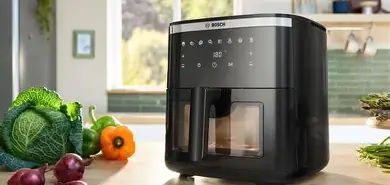
The Bosch Series 6 Air Fryer has become a frequent mention in conversations about countertop cooking appliances. While its core proposition—faster, lower-oil frying with crisp results—seems straightforward, there are a number of capabilities and design choices that tend to be overlooked by buyers during research or at point of sale. This article uncovers five of those less obvious features, explains why they matter in everyday use, and evaluates how they influence purchasing decisions for different households.
At a glance: what buyers typically care about
When consumers evaluate an air fryer, the usual checklist includes capacity, footprint, ease of cleaning, cooking performance, and price. Beyond those basics, many buyers also care about repeatability (consistent results), quiet operation, energy efficiency, accessories and integration with other kitchen appliances, and whether the device supports meal-prep workflows (multi-stage cooking or programmable routines). The Bosch Series 6 Air Fryer addresses many of these points, and several of its most valuable benefits are not immediately obvious from product photos or a short spec sheet.
Five hidden features explained
1. Multi-stage cooking programs (programmable sequences)
One of the most practical but underappreciated features in the Bosch Series 6 is the ability to run multi-stage cooking sequences. Rather than setting a single temperature and timer, the unit can be programmed to perform a series of temperature/time steps—useful for foods that need a gentle start and a high-heat finish.
Real-world use case: a user can program a frozen chicken breast to defrost at a low temperature for several minutes, then ramp up to a higher temperature to finish with a crisp exterior, all in one uninterrupted cycle. This reduces hands-on time and eliminates the need to interrupt cooking to change settings, which is particularly helpful for busy families or those preparing multiple dishes at once.
2. Residual-heat finishing & energy-conscious modes
Residual-heat finishing is a small but meaningful feature: the Series 6 is designed to recognize when a cook cycle ends while the cavity retains enough heat to continue crisping without active heating. The air fryer can switch to a low-power hold mode or shut off the primary heater earlier to preserve texture while saving energy.
Real-world use case: after crisping fries, the appliance can enter a keep-warm or residual-heat phase so the fries stay hot without continued full-power operation. For cost- and energy-conscious buyers, this can shave electricity usage for repeated short cooks during the week.
3. Customizable “favorites” and recipe memory
While preset programs are common across many air fryers, the Bosch Series 6 often includes an easily accessible favorites menu where users can store custom temperature/time configurations under a name. This is not just a convenience feature; it enables consistent results for personalized recipes and saves time for routine preparations.
Real-world use case: a small household that frequently prepares salmon fillets to a preferred doneness can store the exact settings and select them with a single tap, reducing trial-and-error and avoiding overcooking on weeknights.
4. Smart airflow accessory compatibility (stacking and multi-level cooking)
Beyond the primary basket, the Series 6 often supports optional stacking racks or perforated trays that maintain the unit’s circulation dynamics. These accessories are engineered to allow dual-level cooking without significant performance loss—an area where many competitors struggle because adding levels can obstruct airflow and cause uneven results.
Real-world use case: meal preppers can roast vegetables on one level and crisp protein on another simultaneously, cutting total cook time on busy evenings. Buyers with limited countertop space find this particularly advantageous as it reduces the need to run the appliance multiple times.
Find top-rated Electronics products at great prices.
Shop Amazon →5. Integrated sensor checks and cleanliness reminders
Beyond simple timers, the Series 6 incorporates sensor-driven diagnostics that monitor internal temperature consistency and basket condition. Some units will alert the user if the basket is not seated correctly or if sensors detect irregular heat patterns—practical for maintaining performance and preventing unfinished cooks.
Real-world use case: a user unfamiliar with stacking accessories might misalign a tray; the air fryer’s sensor check warns before cooking begins, preventing unevenly cooked food and decreasing the chance of a messy cleanup. Regular cleanliness reminders based on usage hours also help maintain interior performance and reduce lingering odors.
Detailed product review and analysis
Design and build quality
The Bosch Series 6 Air Fryer presents a restrained, appliance-grade aesthetic that fits well in modern kitchens. Controls are typically a combination of tactile knobs and a clear digital display, favoring usability over flashy interfaces. Materials used for the basket and trays prioritize durability and cleanability—expect a non-stick coating that stands up to regular use and dishwasher-safe components in many models.
Cooking performance
Performance is where the Series 6 tends to stand out: rapid air circulation is balanced with targeted heating so that foods achieve a crisp exterior while maintaining moist interiors when programmed correctly. The multi-stage cooking and favorites memory contribute to consistent, repeatable results. For users who prepare batch-cooked meals, the ability to maintain texture across multiple loads is notable.
Usability and controls
Controls are straightforward and designed for repeatability. The combination of presets, temperature dials, and memory slots avoids steep learning curves. For households that prefer smart-home integration, certain variants may include app connectivity or compatibility with voice assistants—useful, though not essential, for the majority who prefer intuitive onboard controls.
Cleaning and maintenance
Cleaning is a frequent buyer concern. The Series 6 typically uses removable, dishwasher-safe baskets and trays. The appliance’s interior finishes are engineered for wipe-clean maintenance, and sensor-driven cleanliness reminders help reduce odor and performance drift. Practical details—such as rounded corners in removable parts and easy-release basket latches—matter more in day-to-day use than marketing claims.
Accessories and expandability
Accessories such as stacking racks, grill plates, and perforated trays expand the unit’s versatility. The key point is accessory design that preserves airflow—poorly designed add-ons can negate the benefits of an air fryer by blocking circulation. Bosch’s accessory line generally focuses on compatibility and airflow-friendly geometries, making multi-level cooks realistic rather than disappointing.
Reliability and serviceability
Appliance buyers often prioritize reliability and availability of service. Bosch positions itself as a brand with broad service networks and replacement parts availability in many markets. For buyers who intend to use an appliance multiple times per day, the ability to obtain replacement baskets or servicing information matters.
Pros & Cons
- Pros
- Well-balanced airflow and consistent crisping across a range of foods
- Multi-stage programming and favorites memory improve repeatability
- Energy-conscious residual-heat modes reduce power use for short cooks
- Accessory compatibility enables real multi-level cooking
- Thoughtful design for cleaning and long-term durability
- Cons
- Higher upfront cost than entry-level models in some markets
- Some features depend on the exact model variant (check specs)
- Optional accessories add cost and are not always bundled
- Smart features and app connectivity vary by region and model
Comparison
The following table provides a concise comparison between the Bosch Series 6 Air Fryer and two common alternatives buyers consider: a broadly representative premium competitor and a value-oriented model. Values are qualitative to reflect typical buyer concerns rather than exact specifications, which vary by exact model and market.
| Feature | Bosch Series 6 Air Fryer | Premium Competitor (e.g., high-end brand) | Value Competitor (budget-focused) |
|---|---|---|---|
| Cooking performance | Consistent, balanced airflow; multi-stage cooking | Very consistent; often advanced app recipes | Good for simple fries and reheating; uneven with stacked loads |
| Controls and usability | Physical controls + presets + favorites memory | Touchscreen with large app ecosystem | Basic dials and limited presets |
| Cleaning | Dishwasher-safe baskets; interior reminders | High-end non-stick and removable liners | Some dishwasher parts; lower-quality coating |
| Accessories & expandability | Good accessory design focused on airflow | Comprehensive accessory kits available | Limited accessories; fit varies |
| Smart features | Selective model-dependent connectivity; robust onboard controls | Extensive app/voice features | Rarely includes smart features |
| Value proposition | Mid- to high-range value for durability and features | High price for advanced features | Low price; basic performance |
Buying guide: what to look for when choosing a Bosch Series 6 or similar air fryer
1. Confirm the exact model and its feature set
Model names within a product series can vary by country and retailer. Buyers should verify whether the chosen Series 6 variant includes multi-stage programming, favorites memory, or app connectivity if those features are priorities. A short spec check avoids surprises.
Looking for the best Electronics deals on Amazon?
Browse Now →2. Consider practical capacity, not just number
Capacity figures can be misleading: a larger basket does not guarantee even cooking. For households that cook for two to four people, a medium-sized basket with multi-level accessory support often provides the best balance of space and heat distribution.
3. Evaluate accessory needs
Decide whether stacking racks or specialized plates will be used frequently. If multi-level cooking is important, confirm that accessories are sold for the specific model and designed to maintain airflow.
4. Assess ease of cleaning and maintenance
Look for dishwasher-safe components, accessible seams, and a user-replaceable basket or liner. Sensor-based cleanliness reminders are a helpful bonus for busy households that might otherwise accumulate odors or grease.
5. Think about long-term use and serviceability
Appliance longevity matters. Check warranty terms, the availability of replacement parts, and local service options. Reliable customer service and spare-part access can make a mid-priced appliance a better long-term investment than a cheaper, disposable model.
6. Prioritize features that match typical cook habits
For weekly meal-preppers, programmable sequences and multi-level cooking will provide the greatest time savings. For single-person households, compact size, low noise, and a favorites menu may be more valuable. Match features to actual routines rather than perceived "must-haves."
7. Energy and footprint considerations
Counter space and energy usage are practical constraints. Residual-heat modes and efficient heating elements reduce cumulative power use for frequent short cooks. Measure available counter space and consider how often the appliance will be stored versus left on the counter.
Conclusion
The Bosch Series 6 Air Fryer offers more than straightforward crisping: its multi-stage programming, energy-conscious finishing modes, favorites memory, accessory-friendly airflow, and sensor-driven checks are features that materially improve everyday use. These capabilities address common buyer concerns—consistency, convenience, cleaning, and energy use—while supporting real-world workflows like meal prep and weeknight dinners.
For prospective buyers, the most important step is matching feature priorities to daily habits and verifying the exact model variant. When selected and used intentionally, the Bosch Series 6 moves beyond the novelty of air frying to become a practical, repeatable tool in the modern kitchen.