A Professional's Take on the New Msi Titan 18 Hx 2025
Introduction
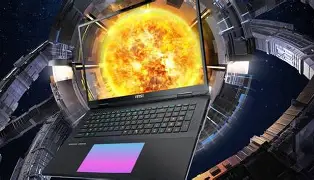
The Msi Titan 18 Hx 2025 arrives with the kind of ambition expected from MSI's long-running Titan family: to be a no-compromise, desktop‑class laptop for people who demand top-tier performance. Positioned at the high end of the market, it targets a cross-section of professionals and enthusiasts — creative professionals, game developers, engineers running CAD and simulation, and avid gamers who also use their system for productivity. This article evaluates the Titan 18 Hx 2025 from a professional perspective, focusing on the real-world aspects buyers care about: performance, thermals, display quality, build and input experience, connectivity, battery practicality, serviceability, and value proposition.
What the Titan 18 Hx 2025 Aims to Be
MSI designed the Titan series to bridge portable workstations and high-performance gaming laptops. The "18" in the model name signals a large-format display size that benefits creators and multitaskers who want an expansive canvas. The HX designation traditionally indicates an enthusiast-class CPU (higher TDP and more cores) and, in many configurations, flagship-class discrete GPUs. The 2025 refresh brings incremental refinements in thermals, display options, and chassis engineering intended to make sustained heavy workloads more manageable than previous generations.
Design and Build: Desktop Feel, Laptop Mobility
From a build perspective, the Titan 18 Hx is deliberately substantial. The chassis is engineered to prioritize cooling and structural rigidity rather than extreme portability. That results in a feeling closer to a compact desktop replacement than an ultraportable laptop. For professionals who move between an office and a studio but return to a desk for heavy work, the trade‑off is appropriate: better heat dissipation and more stable sustained performance in exchange for added weight.
Key practical design notes for users:
- Chassis materials: a combination of metal and reinforced plastic provides a balance of durability and thermal performance.
- Hinge and display positioning: The hinge typically supports a wide opening angle, which helps when sharing the screen for collaboration or attaching external monitors.
- Keyboard and trackpad: Expect a full-sized keyboard with numpad and per-key or zone RGB options in some SKUs; the typing experience is tuned for stability during long sessions. The trackpad size is adequate for precision work but many professionals still pair with an external mouse for extended editing or CAD work.
Display: Size and Options for Professionals
The 18-inch display is a defining feature. MSI commonly offers several panel options for Titan‑series laptops, ranging from high-refresh-rate gaming panels to high-color-accuracy panels targeted at creators. Professionals should look for the following attributes when choosing a configuration:
- Resolution and color gamut: Higher-resolution options (QHD+ or 4K) with wide color gamut coverage (DCI-P3 or Adobe RGB subsets) are most useful for photo and video editors.
- Refresh rate: High refresh rates (120Hz and above) benefit gamers and motion design workflows but are less critical for color-critical image editing.
- Calibration and factory profiles: Some SKUs ship with factory color calibration or calibration tools; buyers who require strict color accuracy should confirm these details prior to purchase.
Performance and Thermals: Sustained Power Is the Point
The Titan 18 Hx 2025 is built around the idea of sustained performance. Where thin-and-light gaming laptops spike to high clocks and then throttle, this chassis is designed to keep clocks higher for longer through larger cooling arrays and more aggressive fan profiles. For professionals, that translates into faster render times, more predictable simulation runs, and better responsiveness when multitasking with heavy applications.
Real-world scenarios where this matters:
Looking for the best Laptops & Computers deals on Amazon?
Shop Amazon →- Video editing and color grading: Long exports and playback of high-bitrate timelines benefit from persistent CPU and GPU throughput.
- 3D modeling and rendering: Complex scenes that require multiple hours to render will complete quicker with fewer thermal-induced slowdowns.
- Software development and builds: Large codebases and parallel compilation tasks gain from additional CPU cores and stable thermal headroom.
However, the trade-offs include higher fan noise under load and a larger thermal footprint. In quiet environments, professionals should be ready to manage fan profiles or use an external cooling dock or sound dampening strategies if necessary.
Ports, Expandability, and I/O
Port selection is a strength for the Titan line. MSI typically equips its high-end laptops with a rich set of connectors to reduce reliance on dongles — a practical benefit for professionals who plug in external storage, displays, or capture devices.
- USB-C / Thunderbolt: Multiple USB-C ports including Thunderbolt (or equivalent high-speed ports) allow fast external GPUs, docks, and multi-monitor setups.
- Display outputs: HDMI and mini DisplayPort (or DisplayPort over USB-C) provide direct connections to external monitors and projectors.
- Storage upgradeability: The chassis usually supports multiple SSD slots (NVMe) and accessible RAM slots, enabling users to expand capacity or performance later.
- Other ports: Ethernet, SD card reader, and a selection of USB-A ports are often included for compatibility with legacy peripherals.
Professionals who rely on external equipment will appreciate this flexibility; those who need to travel light can still use a single Thunderbolt dock to centralize connections.
Battery Life: Practical Considerations
Expect modest battery life from the Titan 18 Hx 2025 under real workloads. Large displays and high-performance components consume significant power, so battery expectations should be calibrated accordingly:
- Light productivity tasks (web browsing, document editing) can yield several hours of use on power-saving profiles.
- Under creative workloads or gaming, battery life drops sharply and the laptop performs best when plugged in.
- For professionals who travel frequently and lack constant access to AC power, consider configuring the machine with power-efficient components or carrying a high-capacity charger/power bank supported by the laptop.
Software and Firmware: Management and Profiles
MSI's system utilities typically include performance and fan-control profiles, as well as display and audio adjustments. For professional use, the availability of a quiet or balanced profile that still preserves acceptable performance is essential. Additionally, regular BIOS and firmware updates can materially affect thermal behavior and performance, so MSI's track record and update cadence are relevant buying considerations.
Pros & Cons
- Pros
- Desktop-class sustained performance suitable for rendering, simulations, and high-end gaming.
- Large 18-inch display options that favor creators and multitaskers.
- Robust connectivity and expansion, minimizing the need for dongles.
- Serviceable design with upgradeable storage and RAM in many configurations.
- Solid build quality aimed at long-term durability for professional use.
- Cons
- Significant weight and size reduce portability compared with thinner 15–16-inch laptops.
- Battery life is limited under heavy use — the laptop is best suited to desk-based workflows.
- Fan noise can be noticeable during sustained heavy workloads.
- Premium price point places it out of reach for budget-conscious buyers.
Comparison Table: How the Titan 18 Hx 2025 Stacks Up
| Model | Target Use | Display | Performance | Portability | Connectivity | Value Position |
|---|---|---|---|---|---|---|
| Msi Titan 18 Hx 2025 | High-end creators, gamers, engineers | 18" panels; options for high-refresh and high-color-accuracy | Desktop-class sustained CPU/GPU performance | Large and heavy; not ideal for daily commuters | Extensive: Thunderbolt/USB-C, HDMI, multiple USB-A, Ethernet, card reader | Premium — prioritizes performance over weight |
| Rival: Razer Blade 18 | Gamers and creators wanting premium aesthetics | 18" high-refresh options; focus on gaming color balance | Strong peak performance; thinner chassis may limit sustained throughput | Slimmer and more portable than Titan | Good selection, fewer expansion bays | Premium — emphasizes portability and design |
| Rival: Alienware (m18 series) | Gamers needing high power and distinctive design | 18" options focused on high refresh rates | Comparable peak performance; thermal tuning varies by model | Large; similar portability trade-offs | Comprehensive ports; some models offer unique thermal features | Premium — gaming-first ergonomics |
Real-World Use Cases
Understanding how the Titan 18 Hx 2025 performs in practical scenarios helps position it correctly for buyers.
Content Creators and Video Editors
Large timelines, multi-layer color grading, and real-time playback of high-resolution footage are demanding tasks. The 18" panel gives editors more screen real estate for timelines and scopes. The combination of a high-core-count CPU and powerful GPU accelerates encoding, decoding, and accelerated effects. For colorists, choosing a configuration with a color-accurate panel and considering external calibration tools will yield the best results.
3D Artists, Animators, and Engineers
Modeling complex scenes and running local render jobs are where sustained throughput matters most. The Titan's thermal headroom reduces the frequency of thermal throttling during multi-hour render jobs, shortening iteration cycles. Engineers running simulations or CAD workloads will benefit from ample RAM and NVMe storage to handle large project files.
Looking for the best Laptops & Computers deals on Amazon?
View Offers →Game Developers
Game development workflows combine coding, asset creation, and frequent playtesting. The Titan's ability to run editors, local servers, and the game under test simultaneously without the system feeling constrained is valuable. Developers who also stream or capture gameplay for demos will appreciate the system’s connectivity for capture cards and multi-monitor setups.
Enthusiast Gamers Who Also Work
For users who want a single machine for intensive gaming and productivity, the Titan offers a compelling mix. Its larger screen provides immersion in games while also serving as a productive workspace during the day. The main compromises are mobility and battery life — the machine performs best when used predominantly at a desk.
Buying Guide: Choosing the Right Titan Configuration
When evaluating Titan 18 Hx 2025 configurations, professionals should consider the following priorities and trade-offs:
1. Prioritize Workload-Driven Components
- CPU: Choose higher-core-count options for parallel workloads (rendering, compiling); single-core clock still matters for certain interactive tasks.
- GPU: For GPU-accelerated rendering, machine learning, or complex real-time previews, invest in the strongest GPU available in the lineup.
- RAM: 32GB is a practical minimum for heavy creative workflows; 64GB or more is recommended for large projects or professional grade simulations.
- Storage: NVMe SSDs are a must. Consider multiple slots (one for OS/applications, another for active projects) to maximize performance.
2. Choose the Right Display Option
- Pick a high-resolution, wide-gamut panel if color accuracy is critical.
- Choose high-refresh panels only if gaming or motion work benefits outweigh the reduced battery life and potential color compromises.
3. Balance Portability Against Power
- An 18-inch Titan will never compete with ultraportables for commute comfort. Decide if the extra screen area and cooling are worth the weight.
4. Check Serviceability and Warranty
- Confirm access to SSD and RAM slots for future upgrades.
- Review warranty terms — on-site or next-day options may be worth the investment for professionals whose work depends on uptime.
5. Consider Thermals and Acoustic Behavior
- Read third-party thermal and noise tests if possible. For shared office environments, a louder fan profile under load may be a factor.
6. Evaluate the Ecosystem
- Software utilities for fan control, color calibration, and performance tuning can materially improve the day-to-day experience.
- Accessories like docks, external monitors, and calibrated colorimeters extend the Titan's functionality for professional workflows.
Final Thoughts
The Msi Titan 18 Hx 2025 is an uncompromising machine designed for users who prioritize sustained performance and a large workspace over mobility. For creative professionals, engineers, and power users who primarily work from a desk or studio, it offers real advantages: a sizable, configurable display, desktop-class performance for long tasks, and a breadth of ports and upgrade options. The principal compromises — weight, battery life, and fan noise — are inherent to its design goals and should be considered against the buyer’s mobility needs.
Ultimately, the Titan 18 Hx 2025 is best understood as a portable desktop: it brings many desktop capabilities into a single chassis while remaining transportable when needed. For those seeking raw performance and an 18-inch canvas in one package, it stands as a compelling choice; for frequent travelers or users who prize battery life and whisper-quiet operation above sustained throughput, a thinner, more power-efficient laptop may be a better fit.
Professionals considering this model should match the configuration to their workflow, confirm the display and calibration options, verify serviceability for future upgrades, and plan for power and acoustics management in their working environment. With those considerations addressed, the Titan 18 Hx 2025 can deliver a highly productive and powerful experience for demanding workloads.