Head-to-Head: Boya Magic vs Om System Om 5 Ii (Detailed Comparison)
Introduction
When building a reliable content-creation kit, buyers often face two kinds of decisions: which camera will capture the visuals, and which audio tools will ensure those visuals are supported by good sound. The Boya Magic and the OM System OM-5 II represent two distinct but commonly paired pieces of kit in many creators' bags — one primarily focused on clean, usable audio, the other on compact, stabilized imaging. This article examines both products in detail, evaluates real-world performance and trade-offs, and helps prospective buyers understand which device (or combination) best suits common shooting scenarios such as vlogging, run-and-gun documentary work, travel photography, and small-studio interviews.
Product overviews and targeted users
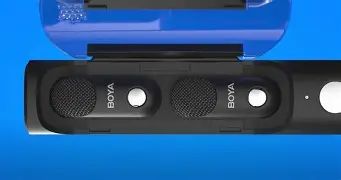
Boya Magic is positioned as an affordable, creator-focused audio accessory intended to simplify the process of capturing clear speech and on-camera sound. The product family from Boya has emphasized portability, ease of use, and plug-and-play behavior so that vloggers, social video creators, and interviewers can get professional-sounding audio without an extensive audio workflow.
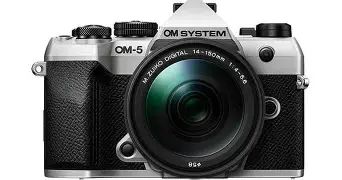
OM System OM-5 II arrives from OM System's lineup of compact Micro Four Thirds cameras aimed at photographers and hybrid shooters who prioritize mobility, in-body stabilization, and weather resistance. OM System cameras traditionally appeal to travel photographers, nature shooters, and video creators who need a small footprint without compromising on advanced features like in-body image stabilization (IBIS), robust autofocus, and flexible handling.
Detailed product analysis
Boya Magic — design, usability and real-world audio
In practice, Boya Magic is built around the needs of content creators who want a minimal learning curve. The form factor is compact and clip-on configurations are common, making it appropriate for one-person shoots where the host needs hands-free operation. Its user experience highlights include simplified pairing/setup and straightforward mounting options that fit smartphones, small cameras, or laptops.
Real-world use cases where Boya Magic shines:
- Solo vlogging and travel video where the host needs portable audio without carrying a larger recorder and mic setup.
- Interviews and run-and-gun journalism that prioritize quick attach/detach and consistent voice clarity.
- Remote streaming or virtual meetings where room noise must be minimized and speech intelligibility is more important than music-quality fidelity.
Audio performance in the field tends to emphasize clarity of the voice, with practical attenuation of ambient noise under moderate conditions. For creators shooting outdoors, a wind muff or foam cover remains recommended to reduce plosives and wind rumble. Battery life and charging convenience are important factors in real shoots — Boya devices typically aim for all-day usability on a single charge, and integrated recharging via USB-C or micro-USB is valued for its convenience.
OM System OM-5 II — imaging, stabilization and handling
The OM-5 II targets photographers and hybrid shooters who require a portable camera with advanced stabilization and weather sealing. In real-world scenarios, the OM-5 II is useful for travelers and outdoor shooters who often encounter variable conditions and who prefer a smaller system to lug around while still accessing a broad lens ecosystem.
Practical strengths for everyday use:
Looking for the best Cameras & Photography deals on Amazon?
Browse Now →- Handheld shooting in low-light and telephoto scenarios thanks to in-body image stabilization, which reduces the need for bulky tripods.
- Travel and landscape photography where compactness and weather resistance reduce logistical friction.
- Hybrid video work where a flip screen, camera ergonomics, and reliable autofocus contribute to faster, more confident shooting.
In actual shooting, the OM-5 II's stabilization is beneficial for running-and-gun video or long exposures when a tripod is impractical. Its physical controls are designed for photographers who prefer tactile dials and direct access to exposure parameters. Battery life depends on usage patterns — video and heavy image stabilization will reduce runtime — but the camera’s efficient power management typically supports multi-hour shoots when paired with spare batteries.
Pros & cons
Pros & cons — Boya Magic
- Pros:
- Compact and easy to mount for single-person shoots
- Simple setup ideal for creators without audio engineering experience
- Good voice clarity for interviews, vlogs, and spoken-word content
- Generally affordable compared to higher-end wireless systems
- Cons:
- Limited advanced controls for audio shaping (EQ, gain) on-device
- Wind and very noisy environments can expose limitations
- May lack professional XLR connectivity or multi-mic support without adapters
Pros & cons — OM System OM-5 II
- Pros:
- Strong in-body stabilization for handheld shooting
- Compact, weather-sealed body suited to travel and outdoor use
- Flexible lens ecosystem from the Micro Four Thirds mount
- Hybrid photo/video performance with intuitive controls
- Cons:
- Micro Four Thirds sensor size may not match full-frame low-light performance
- Battery life can be impacted by heavy stabilization or long video recording
- High-end video features (e.g., long continuous 4K recording at high bitrates) may be limited compared to flagship cinema-oriented bodies
Comparison table
| Attribute | Boya Magic | OM System OM-5 II |
|---|---|---|
| Product type | Audio accessory / microphone | Compact mirrorless camera (Micro Four Thirds) |
| Primary purpose | Capture clear spoken audio for video and streaming | Capture stills and video with stabilization and compact handling |
| Portability | Very high — clip-on pocketable unit | High — camera body and small lenses, travel-friendly |
| Ease of use | Designed for plug-and-play operation | Designed for photographers; offers automatic and manual modes |
| Best for | Vloggers, streamers, interview setups | Travel, wildlife, landscape, hybrid video creators |
| Audio monitoring | Basic on-device control; external monitoring depends on host device | Has microphone input and usually headphone monitoring via adapter/port |
| Weather resistance | Dependent on accessory model; generally limited | Weather-sealed body, suitable for challenging conditions |
| Compatibility | Works with smartphones, cameras, and computers (depending on version) | Compatible with Micro Four Thirds lenses and accessories |
| Typical use case pairing | Paired with compact cameras or phones for vlogging | Paired with external microphones like Boya Magic for full kits |
How they complement each other in a kit
Rather than being direct competitors, Boya Magic and the OM System OM-5 II are complementary. A compact mirrorless camera benefits enormously from a dedicated, close-miking solution when the subject needs clear dialogue. Conversely, a high-quality microphone will be underused without a capable imaging device to match its output. For solo creators, this pairing addresses two of the most common pain points: stable, usable video and intelligible, clean audio.
Common kits and workflows may include:
- OM-5 II as the primary capture device for video, paired with Boya Magic clipped to talent for synchronized audio recorded separately or fed into the camera where possible.
- Using Boya Magic as a wireless lavalier during run-and-gun interviews while the OM-5 II records high-quality footage; synchronization can be handled in-camera or in post with simple waveform alignment.
- Indoor streams or interviews where the OM-5 II provides the shallow depth-of-field look and the Boya Magic ensures speech remains intelligible even when room acoustics are challenging.
Buying guide — what to consider
When choosing between devices or deciding whether to buy both, the following buyer concerns typically guide the decision:
1. Intended primary use
Buyers who prioritize photography and cinematography quality should start with the camera. Those whose content is predominantly talk-focused, such as podcasts, interviews, or livestreamed Q&A, should prioritize a dependable microphone. For hybrid creators, investing in both — a compact stabilized camera and a usable lavalier — is often the most effective path.
2. Mobility and travel considerations
Travel content creators benefit from a low-weight, weather-resistant camera body and a compact mic. The OM System OM-5 II’s compactness and durability make it a strong camera choice for travel. Boya Magic’s small size and simple mounting mean it adds negligible bulk.
3. Audio quality needs and monitoring
Audio monitoring and control matter. If real-time headphone monitoring is critical, confirm connectivity options on the camera and microphone. Some microphones require adapters or interfaces to enable live monitoring into the camera. Buyers should check whether the OM-5 II has a headphone jack or whether an external audio interface is necessary.
4. Workflow and post-production
Consider how audio will be recorded and synced. Recording audio directly into the camera simplifies post-production but can be constrained by camera input quality. Recording separately to a mic transmitter or recorder gives more control but requires syncing in post — a small time cost for potentially better sound.
Discover deals on Cameras & Photography — updated daily.
See Deals →5. Budget and upgrade path
Budget-conscious buyers should prioritize one core item first. For many, a versatile camera is the foundation; audio upgrades can follow. Alternatively, creators whose content is heavily voice-centric may get more immediate benefit from a good mic paired with an entry-level camera or smartphone. Plan an upgrade path: lenses for the OM-5 II and wind protection, cables, or adapters for the Boya unit.
6. Accessories and durability
Accessories to consider include spare batteries, protective cases, wind protection for microphones, shoe mounts or clamps, and cables that match camera inputs. For outdoor work, confirm the microphone’s resistance to moisture and whether protective accessories are needed. The camera’s weather sealing reduces risk in challenging environments but does not eliminate the need for care.
7. Compatibility and ecosystem
Check that any microphone model is compatible with the intended recording device (smartphone, camera, or audio recorder). For the camera, the Micro Four Thirds mount affords many lenses, but buyers should ensure the specific OM System OM-5 II features they need are supported by chosen lenses and accessories.
Real-world buying scenarios
To make the guidance actionable, consider three representative buyer profiles:
- The travel vlogger: Prioritizes light weight and weather resistance. The OM-5 II provides stabilized, travel-friendly imaging; pairing with a compact lavalier from Boya offers speech clarity without bulk.
- The independent interviewer: Needs dependable audio even in noisy environments. Prioritize a microphone with strong voice pickup and wind protection; the OM-5 II’s stabilization helps keep interviews visually steady during handheld moves.
- The livestreamer/educator: Requires real-time monitoring and low-latency audio. Confirm camera and microphone compatibility for monitoring; sometimes a small audio interface is worth adding to ensure reliable headphone feeds while using a high-quality microphone.
Final considerations before purchase
Buyers should read recent reviews, watch sample videos, and — when possible — test gear in situations similar to their intended use. Key questions to verify in specs and hands-on testing include how the microphone handles wind and distance, how the camera performs in desired lighting, what connections and monitoring options are supported, and whether the combined setup fits the intended mobility profile.
Conclusion
In a head-to-head framed as a choice, Boya Magic and the OM System OM-5 II fulfill different but complementary roles. Boya Magic addresses the perennial challenge of capturing clear speech affordably and simply; the OM-5 II supplies stabilized, compact imaging for creators who need capable stills and video performance from a small body. For most creators, the best outcome is not choosing one over the other but assembling a kit where each device does what it does best: the camera captures the image, the microphone captures intelligible sound. Buyers should prioritize based on primary needs — image quality and mobility versus spoken-word clarity — and then consider the other device as the natural complement that elevates the overall production quality.