The Real Truth: Royal Kludge L75 or Wobkey Crush 80?
When shoppers look for a compact mechanical keyboard that balances desk space, typing comfort, and customization, two names often appear in the conversation: the Royal Kludge L75 and the Wobkey Crush 80. Both aim to deliver strong value in the 75–80% layout segment, but they target slightly different priorities. This article examines both models through the lens of real-world use cases—programming, content creation, office productivity, and gaming—and provides a practical buying guide to help a buyer choose the right board.
Why the 75–80% Segment Matters
The 75–80% form factor sits between tenkeyless (TKL) and 60% boards. It preserves essential keys—arrow cluster, function row, and a compact navigation cluster—while saving desk space. For many buyers this is the sweet spot: comfortable on-the-go or in tight workspaces, but without the key compromises of a 60% board. When choosing a model in this class, the most important considerations are typing feel, layout ergonomics, connectivity options, and how extensible the platform is for future upgrades.
Royal Kludge L75 — Analysis & Real-World Impressions
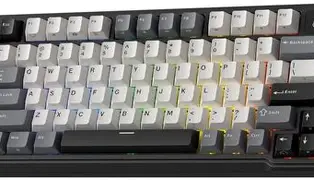
The Royal Kludge L75 is positioned as a budget-friendly, feature-rich compact keyboard. In practice, it appeals to buyers who want modern conveniences—multiple wireless modes, hot-swap flexibility, and RGB lighting—without a steep price premium. The build quality and feature set make it a frequent recommendation for first-time customizers and those looking for a plug-and-play daily driver.
Design and Build
The L75 generally adopts a low to mid-profile plastic or aluminum frame depending on the variant. It emphasizes a compact footprint with a slightly condensed key spacing to fit the 75% layout. For many users the design hits a practical balance: sturdy enough for desk use, light enough for occasional transport.
Typing Feel and Switches
Royal Kludge frequently ships the L75 with a range of switch options—linear, tactile, or clicky—often including both their in-house and third-party switches. A key selling point for many buyers is the hot-swap PCB option on select models: it enables swapping switches without desoldering, a major convenience for users experimenting with different switch types. Typing feel can vary by supplier and the switch chosen, but with a decent set of stabilizers and aftermarket keycaps the L75 will satisfy typists and gamers alike.
Connectivity and Battery
The L75 commonly supports multiple connection modes—USB-C wired, Bluetooth 5.x, and sometimes a 2.4 GHz dongle. This range makes it an attractive option for those who switch between a desktop, laptop, and mobile device. Battery life is typically in the multi-day to week range under mixed usage when RGB is off or dimmed; heavy RGB use and 2.4 GHz polling will shorten this considerably.
Software, Customization, and Firmware
Royal Kludge provides a vendor utility for remapping keys, creating layers, and managing RGB. For buyers who value on-the-fly customization, the presence of onboard layers and software support is a practical advantage. That said, firmware quality and software polish can vary; buyers who prioritize open-source firmware support (VIA/QMK) may need to check the exact L75 revision or community resources for compatibility.
Real-World Use Cases
- Programmers and writers: The preserved function row and arrow cluster make the L75 comfortable for coding and editing without sacrificing desk space.
- Hybrid workers: Multiple wireless modes and compact size suit users who switch between an office PC and a laptop.
- Casual gamers: Low input latency in wired or high-quality wireless modes paired with common switch choices make it serviceable for gaming sessions.
Pros & Cons — Royal Kludge L75
- Pros: Versatile connectivity, frequently offered in hot-swap variants, strong value-for-money, compact yet practical layout.
- Cons: Software polish can be inconsistent across regions, stabilizer tuning may need user adjustment, and variants differ—so specifications should be checked carefully before buying.
Wobkey Crush 80 — Analysis & Real-World Impressions
The Wobkey Crush 80 aims to compete in the premium-leaning end of the compact segment by emphasizing a refined typing experience and solid construction. It targets buyers who value sound profile, stabilizer tuning, and a slightly more substantial chassis. Where the Royal Kludge sells versatility, the Crush 80 often sells refinement.
Design and Build
The Crush 80 typically sports a heavier chassis and attention to detail in plate mounting and case finish. This can translate into a more damped, substantial typing sound and a feeling of sturdiness that some buyers prefer for desktop permanence. The case profile and gasket or plate mounting approaches—depending on the exact variant—affect typing feedback, offering options for a firmer or softer feel.
Looking for the best Laptops & Computers deals on Amazon?
View Offers →Typing Feel and Switches
Wobkey may bundle the Crush 80 with higher-grade switches or focus on delivering a pre-banded, well-lubed experience out of the box. Buyers who prioritize out-of-the-box acoustics and smoothness will appreciate these choices. If the Crush 80 comes with a soldered PCB rather than hot-swap, it signals a focus on factory setup and optimized sound rather than easy modding.
Connectivity and Battery
The Crush 80 commonly provides wired USB-C connectivity and may include Bluetooth options. Where wireless performance matters, buyers should verify the board’s advertised Bluetooth versions and latency characteristics. Battery life expectations follow similar patterns to comparable 75–80% boards: reasonable for daily mixed use but contingent on backlight and wireless usage.
Software, Customization, and Firmware
Wobkey’s approach tends to be less about heavy vendor software and more about delivering a satisfying hardware experience with sensible onboard functionality. For power users who want deep remapping, it is important to confirm whether the Crush 80 supports VIA/QMK or a vendor utility.
Real-World Use Cases
- Desktop typists: Buyers who keep a keyboard at one workstation and want a satisfying acoustics and key feel will find the Crush 80 appealing.
- Content creators: A stable, heavier board prevents sliding on a crowded desk and offers a steady platform for long typing sessions.
- Keyboard enthusiasts: Those who value premium stabilizers and tuned sound profiles may prefer the Crush 80’s factory setup.
Pros & Cons — Wobkey Crush 80
- Pros: Focus on typing refinement and build solidity, often better out-of-the-box acoustics, stable desktop presence.
- Cons: Less emphasis on hot-swap flexibility in some variants, potentially higher price for similar core features, and fewer wireless options depending on configuration.
Feature Comparison
| Feature | Royal Kludge L75 | Wobkey Crush 80 |
|---|---|---|
| Layout | 75% compact; preserves arrow keys and function row | 80%/75% family; slightly wider navigation cluster depending on variant |
| Hot-swap | Available in many variants — check product listing | Less consistently hot-swap; some models prioritize soldered PCBs for tuning |
| Switch Options | Vendor and third-party linear/tactile/clicky switches available | Often bundled with higher-grade or tuned switches |
| Keycaps | ABS or PBT options depending on batch; profile varies | PBT preferred on many units; focus on sound and feel |
| Connectivity | USB-C, Bluetooth, sometimes 2.4 GHz | USB-C and Bluetooth options; wireless variants may be limited |
| Battery | Typical multi-day life in Bluetooth; depends on RGB | Comparable multi-day life; depends on wireless and backlight |
| Software/Firmware | Vendor utility and onboard layers; community support varies | More hardware-first; firmware and remapping support varies by version |
| Sound Profile | Neutral to bright without modifications; improved with mods | Usually tuned for a deeper, more muted sound out of the box |
| Best For | Buyers seeking value and flexibility (hot-swap, wireless) | Buyers prioritizing build, acoustics, and desk permanence |
Buying Guide: How to Choose Between the Two
Choosing the right board comes down to priorities. The following checklist helps align a buyer’s needs with the strengths of each model.
1. Prioritize Modularity or Out-of-the-Box Refinement?
If the buyer values easy switch experimentation—trying linear, tactile, or clicky switches without soldering—look for a hot-swap L75 variant. If a buyer wants a keyboard that sounds and feels great immediately and prefers a factory-tuned experience, the Crush 80’s more refined hardware focus may be preferable.
2. Connectivity Needs
Those who switch devices frequently should prioritize multiple wireless modes and stable multi-host Bluetooth pairing. Royal Kludge tends to advertise multi-mode functionality more often; buyers should confirm the Crush 80’s wireless capabilities if they require seamless device switching.
3. Space and Ergonomics
Both boards save space compared with full-size layouts, but slight differences in key spacing and case angle affect comfort. If possible, test the layout in person or look for reviews that measure case height and typing angle to avoid surprises.

4. Sound and Typing Preference
Does the buyer prefer a snappy, crisp keypress or a deeper, muted thock? The Crush 80 is more likely to lean toward a thockier profile out of the box; the L75 may require mods (lube, foam, different keycaps) to reach the same character.
Looking for the best Laptops & Computers deals on Amazon?
Shop Amazon →5. Software and Remapping
Power users who rely on extensive remapping, macros, and layers should verify firmware compatibility with VIA or QMK before purchase. If vendor software is acceptable, confirm how intuitive and reliable the provided utility is.
6. Budget and Long-Term Value
Royal Kludge products frequently undercut competitors on price while offering many features—making them attractive for budget-conscious buyers. Wobkey models may command a higher price for improved materials and tuning. Consider long-term value: boards that are hot-swap-friendly or have good community support retain interest longer for hobbyists.
7. Warranty, Support, and Community
Warranty and local support vary widely by seller and region. Community resources—forums, user groups, and modification guides—can make a big difference, especially for buyers interested in customizing stabilizers, lubing switches, or reflashing firmware. Check the active user communities around each board before deciding.
Tests to Perform Before Buying (or Soon After Receiving)
- Check every key for consistent travel and actuation—stickiness or uneven resistance may indicate stabilizer or switch issues.
- Test the arrow keys and navigation cluster for comfort during extended typing sessions.
- Try wired mode for latency-sensitive use cases (competitive gaming) to verify response and lack of detectable input delay.
- Evaluate the battery life in wireless mode under normal brightness—RGB drastically changes endurance.
- Inspect stabilizer rattle and spacebar sound; minor tuning steps (lubing, clipping) can dramatically improve experience but require time.
Final Verdict
Both the Royal Kludge L75 and the Wobkey Crush 80 have clear strengths and a target audience. The L75 is the practical choice for buyers who want breadth of features—hot-swap flexibility, multiple wireless modes, and broad switch availability—at an accessible price. It suits newcomers to mechanical keyboards and hybrid users who value versatility.
The Wobkey Crush 80, by contrast, is attractive for those who prioritize a refined, stable typing experience straight out of the box. It tends to emphasize build quality and acoustics over modularity. Desktop typists, content creators, and users who prefer a more premium feel with less tinkering will likely appreciate what it brings to the desk.
Ultimately: choose the Royal Kludge L75 if flexibility and value are the priority; choose the Wobkey Crush 80 if sound, weight, and out-of-the-box refinement matter more. Both models can satisfy a wide range of buyers, but the right pick depends on whether the buyer wants to tinker and customize or plug in and enjoy a tuned experience.
Conclusion
For buyers navigating the 75–80% mechanical keyboard market, the decision between the Royal Kludge L75 and the Wobkey Crush 80 reduces to a simple trade-off: flexibility versus refinement. Understanding one’s workflow—how often the keyboard will move between devices, whether the buyer enjoys modding, and what acoustic profile is preferred—will reveal the better match. With the considerations and tests laid out above, a buyer can approach the purchase with clarity and confidence, choosing the board that best supports daily productivity and long-term satisfaction.